Categories
Family

If I Was a Man

I’ve recently been on the job hunt. It was stressful and very depressing.

Why you ask?

Well, I was getting questions that shouldn’t be asked at all. The questions fell into the following topics:

  1. Parental status inquiries: Seriously, why is this even a thing? Last time I checked, my ability to do the job wasn’t determined by my offspring count.
  2. Postcode obsession: Just to be clear, when I mention my postcode, I’m not sending out invites for a neighbourhood block party. Let’s keep the focus where it belongs—on my qualifications, not my street address.
  3. The sad reality of job hunting for women: It’s like navigating a minefield of sexism and discrimination at every turn. From biased questions to unequal treatment, it’s a frustrating journey.


It all boils down to one thing: Can you do the job, rock those skills, and bring a can-do attitude? Not your sex, postcode, or parental status matters here.

“If you exclude 50% of the talent pool, it’s no wonder you find yourself in a war for talent.” Theresa J. Whitmarsh, Executive Director of the Washington State Investment Board. Image sourced from https://www.weforum.org/agenda/2016/03/quotes-on-women-at-work/

Ah, picture this scenario: Imagine being nestled amidst the serene beauty of the Blue Mountains, where kangaroos might just be your neighbours and the sound of a kookaburra’s laugh is your morning alarm. That’s where our story begins!

So, there I was, having a chat with a recruiter who seemed to think that commuting from the tranquil mountains to bustling North Sydney was like attempting to teleport to Mars. “Sorry, darling, but that commute just ain’t happening!” she exclaimed as if the concept of travel beyond the hills was a mythical tale.

And oh, the fun didn’t stop there! The recruiter, bless her heart, seemed convinced that being a mum meant I could only handle jobs on a part-time basis, as if my superpower was limited to juggling the house and kids instead of full-time work. But hey, I proudly declared, “Yes, I am on the lookout for a full-time gig!”

I even tried to reassure her that hopping on a train was as easy as snagging the last lamington at a bake sale, but she just couldn’t let go of her travel woes. It was like convincing a koala that eucalyptus leaves are so last season!

Then came the kicker: the whole “working from home” debate. When I floated the idea, it was like suggesting we paint the Sydney Opera House hot pink – a firm no-go. But lo and behold, after bidding adieu and sending a polite email, suddenly the tune changed. Flexibility? In this economy? Who would’ve thought!

But alas, despite the picturesque backdrop of the mountains and the potential for work-life balance, something just didn’t sit right. Call it intuition or maybe just good old-fashioned common sense, but diving deeper into the interview process only led to a virtual face-off with the rudest of interviewers.

This Zoom encounter felt more like a scene from a comedy of errors, with the interviewer tossing insults and criticisms like confetti at a parade. It was as if she couldn’t fathom that a mountain mum could also be a professional powerhouse. But hey, I stood my ground, reminding her that qualifications and skills don’t come with a gender bias.

In the end, it was a tale of mismatched expectations, a dash of rudeness, discrimination and a sprinkle of disbelief – all served with a side of resilience and a reminder to always trust your gut, especially when it’s screaming, “Abort mission!”

Why is my family life and travel situation suddenly in the spotlight? It is off-topic, wouldn’t you say?
🚀 Exposing the Real-Life Discrimination Mums Face in Job Hunting: It's Time for Change! Dive into the Unfiltered Truths of Sexism and Postcode Discrimination. Let's Break the Silence and Demand a Fair Shot for All! Click to Uncover the Reality. 💼🌟  #MomDiscrimination #MumDiscrimination #FairOpportunities #UnveilTheTruths
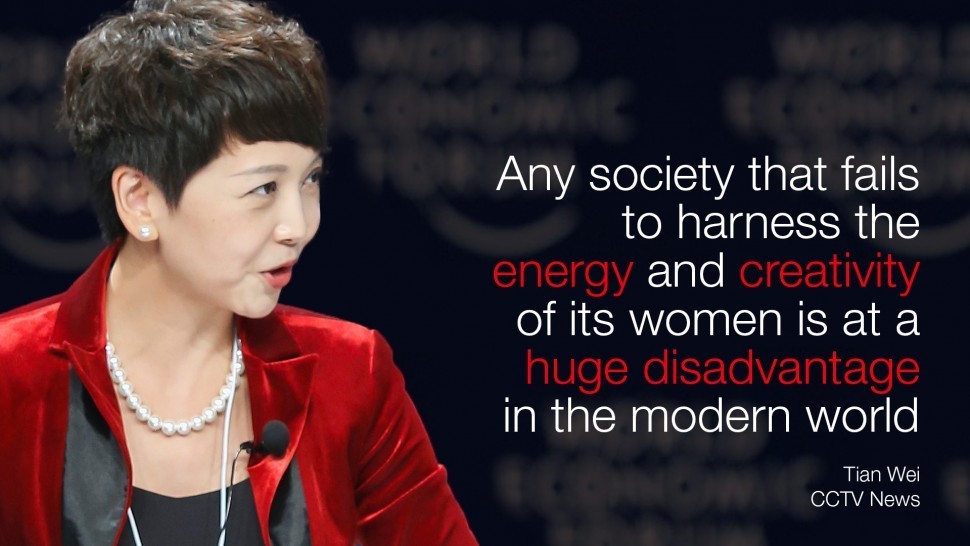
“Any society that fails to harness the energy and creativity of its women is at a huge disadvantage in the modern world.” Tian Wei, CCTV News. Image sourced from https://www.weforum.org/agenda/2016/03/quotes-on-women-at-work/

Not only was the job opportunity in North Sydney glaringly misrepresented, but it also turned out to be a bit of a unicorn hunt. You see, they advertised for a Marketing Manager, but what they really needed was a Chief Marketing Officer to build everything from scratch. Now, that could’ve been an exciting challenge, but the interviewer seemed more interested in building barriers than bridges. The phone interview felt like a rollercoaster of aggression and discrimination, leaving me absolutely certain that if I were offered the position, I’d politely decline.

Now, onto the next adventure in job hunting! This time, the opportunity was in Western Sydney, and I was totally fine with that. I knew I’d have to make the trek to the office, but they did offer some work-from-home days, which was a nice touch. However, the interviewer, another woman (go figure!), seemed to think I needed a geography lesson. She bombarded me with emails and calls, listing off the exact mileage between my home and the office, as if I hadn’t already scoped it out before applying. I mean, seriously, why the obsession with my commute?

Despite assuring her that I was perfectly content with the travel arrangements, she just wouldn’t drop it. It felt like everyone was making a mountain out of a molehill! And don’t even get me started on the recurring theme of being judged based on where I live and the fact that I’m a mother. It’s like people have this preconceived notion that being a mum means you can’t possibly handle a full-time gig in the office. Newsflash: I’m more than capable, thank you very much!

Fast forward to another opportunity: after enduring a marathon second interview that lasted nearly three hours, I was later told that I didn’t “fit the business” due to my location and family situation. Can you believe it? Talk about a real slap in the face!

But wait, there’s more. They even threw in some extra feedback for good measure: You had some B2B experience (they knew this and liked my strategy examples and how to change focus for different products and drive sales) “Your interview was solid, but additional concerns were raised over this being a full-time, office-based role, and travel, and the potential impact this may have on your long-term employment.”


I don’t believe that my location was asked at the first interview and this made them decide to not hire me when they found out where I lived. It’s beyond frustrating to witness how outdated attitudes still hold sway over who gets a shot at what roles. And don’t even get me started on the absurdity of postcode discrimination – it’s enough to make your blood boil!

I found a fabulous and fantastic job. The team have been welcoming and friendly, they are family friendly, and I work 1 day a week in the office and the rest of the week from home. I am grateful beyond words that the universe made this happen and thankful that the offer that I got is a place that fits in with my family and allows me to contribute to the business and my career. 

Ah, you know what? Looking back, I’m actually thankful I didn’t land that job. It’s like the universe had other plans in store for me, leading me straight to the wonderful opportunity I’ve recently embarked on. It’s funny how things work out sometimes, isn’t it? (I am very happy with my new job and glad that I kissed a lot of frogs to land a prince of a placement).

As the world gradually scales back on remote work options, it’s becoming increasingly clear that women will bear the brunt of this shift. With fewer opportunities for flexible arrangements, many are finding themselves trapped in a conundrum where finding suitable employment becomes a Herculean task. This not only impacts their ability to earn a living and contribute to their financial security but also restricts their freedom to navigate life’s challenges, such as leaving a relationship while maintaining stability.

While COVID-19 brought about myriad challenges, one silver lining was the widespread acceptance and success of remote work. Leveraging technology, we witnessed how seamlessly many roles adapted to remote setups, fostering productivity and work-life balance. So, why backtrack on this progress? Insisting on in-office presence as a measure of productivity feels archaic, reminiscent of a bygone era when physical presence equated to commitment.

Yet, my encounters weren’t isolated incidents. Almost every interview was marred by intrusive, sexist inquiries that left me seething with frustration. I vividly recall a particularly exasperating exchange with a young recruiter who seemed fixated on my ability to balance work and motherhood. Despite demonstrating my capability and track record, I was continually prodded about childcare arrangements as if my gender predetermined my competence.

And the irony? These interrogations occurred for roles explicitly advertised as remote, underscoring the absurdity of it all. The disparity in treatment between men and women in the hiring process is glaring, perpetuating age-old stereotypes and hindering progress towards gender equality.

The ramifications extend beyond mere inconvenience; they threaten to exacerbate existing inequalities in earning potential and financial security. Women, already burdened by the gender pay gap, now face the added hurdle of limited job opportunities. This not only jeopardises their present but also casts a shadow on their future, especially concerning retirement planning and financial independence.

With two daughters poised to enter the workforce, I can’t help but feel disheartened by the persisting barriers they’ll encounter.

Questions loom large:

When will women be judged on their merits alone?

Why are skills and abilities overshadowed by archaic notions of gender roles?

And why do women continue to face discrimination at the hands of their own gender?

These questions demand answers. It’s time to dismantle the barriers that confine women to outdated stereotypes and unequal treatment. After all, the strength of our workforce lies in diversity, and it’s high time we embraced it fully.”

If I was a man, how different would my working life be? 

As I reminisce about my youthful days, envisioning a dynamic mid 20-something with aspirations as vast as the moon itself, I recall taking a bold leap towards an exciting opportunity in film production. Picture me, filled with starry-eyed enthusiasm, when suddenly, I’m hit with the age-old question: “Are you planning on having kids?” Swiftly, I respond, “Perhaps someday, but let’s hit pause on that topic for now,” followed by a playful reality check to the interviewer, questioning the relevance of such a query.

But alas, did my honesty strike a dissonant chord? Spoiler alert: I didn’t secure the position. This led me to ponder whether I deviated from their expected narrative, or perhaps—here’s the kicker—that question should have been omitted entirely, particularly when posed to women whose talents extend far beyond maternal considerations.

It’s akin to a broken record, isn’t it? The familiar refrain of sexist and impertinent inquiries that echo through countless interviews. I can’t help but wonder, if I were a man, would they have refrained from delving into personal matters? Would my calling out of the off-key note prompt a swift acknowledgment and a change in direction? Or perhaps, in an alternate reality, such questions wouldn’t even warrant consideration.

At times, I find myself daydreaming about a male iteration of myself. Would the spotlight cast a different glow? Would I find myself juggling a plethora of opportunities? It’s a thought-provoking notion, one that may evoke a mixture of contemplation and frustration.

And here’s the kicker: my husband has never faced the same line of questioning in his professional endeavours, nor have my male friends. It begs the question: why the discrepancy? Why are women subjected to inquiries that their male counterparts don’t encounter?

Have you ever pondered how different the lyrics of your life’s soundtrack would be if you were a man? It’s a compelling question, inviting reflection on the complexities of privilege and perspective.

Women are still undervalued and underpaid. I cannot believe that is still happening.

“Australia’s national gender pay gap is 12 per cent. As of November 2023, the full-time adult average weekly ordinary time earnings across all industries and occupations was $1982.80 for men and $1744.80 for women. For every dollar on average men earned, women earned 88 cents. That’s $238 less than men each week.” https://www.wgea.gov.au/


If I were to don the hat of a man, would I still find myself precariously perched on the edge of a weekly fiscal cliff, facing a deficit of $238, dancing precariously close to an annual loss of $6,188? It’s a thought that sets my instincts ablaze, sparking a rebellion against the injustice that demands swift redress. Employment practices persist in squeezing every last cent, and unfortunately, it’s us women who often find ourselves bearing the brunt of these financial pinches.

In my recent jaunt through the job market, I encountered a relentless barrage of forms prodding for my current salary—a figure as irrelevant to the potential new role as a fish on a bicycle.

Would sticking to my guns as a woman in these negotiations mean resigning myself to settling for less? Or under a different set of societal expectations, would they have gladly offered up the industry-standard salary without batting an eyelid? It’s a question that haunts me, one I’m unable to answer as I remain firmly on the side of the gender coin labelled ‘female’.

Echoes of “The Man” ricochet around my mind as I contemplate the state of my superannuation—what whimsical twists of fate might await me had I navigated this world sporting a gentleman’s guise, free from the gaping maw of the gender pay gap?

Have you wondered what your life and career would be like if you were a man?

How about getting treated the same for pay, career opportunities and more?

Sign up for my newsletter

Stay current with all the things that are happening on Mummy to Twins Plus One. Don’t miss a thing by signing up for my newsletter.
Categories
News

WHY Are women still underpaid and undervalued

Note: This was about International Women’s Day from 2016.  It is an interesting read and I am not sure if much has changed.

——————————————————————————————————————————————————————————————————————–


The other week we celebrated International Women’s Day.  Lately, there have been many articles about women and girls; the topics range from equal pay, pocket money, women not being in leadership roles, how women manage money, and more!

Inequality is still a major issue and I’m sure I am not the only one that finds this appalling. Yes, it is 2016 and we are still not treating women and girls as equals. Why is being female such a negative thing? We are strong, we have children, we solider on just like men do, and we manage the household, we manage kids and work and also have a career to boot. Plus some of us, myself included taking time out to do unpaid work of looking after kids and family. This unpaid work is not easy as there are no holidays, sick days, or thanks for the majority of the job. However, if you don’t do something it gets noticed instantly. Have two kids sick and you are ill and struggling, you are on your own. You cannot call in and tell the boss you cannot come in that day. Oh, how I wish this was the case!

Girls and women are more highly educated than ever before and it is reflected in the workforce. More and more women are striving for the top jobs and also entering into industries that were seen once as male-only domains, such as engineering, IT and much more. I for one believe and so does hubby, that jobs should be matched on a skill basis. If you fulfil the skill and job requirements you should be seriously looked at for the role, and your gender should not be a factor to determine if you get a job, or if you get a promotion or if you get a pay rise or paid the right amount of money.

Here is my rant about the inequality that women deal with. Yes, I have my cranky pants on and I’m not apologizing for being angry. Everyone should see this as unforgivable. If you have daughters would you want or accept that they will always be underpaid and undervalued? I would hope not!

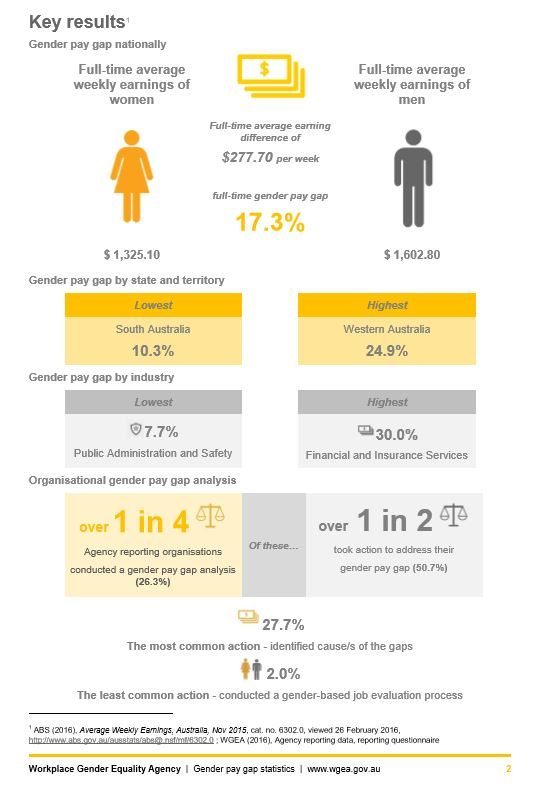
Gender Pay Gap Stats. Image from https://www.wgea.gov.au/sites/default/files/Gender_Pay_Gap_Factsheet.pdf

Why are top female sports professionals so underpaid?

The Matildas are Australia’s national soccer team. The team have been very successful in the FIFA World Cup and in the lead up to the Olympics. There has been a pay dispute with FFA (Football Federation of Australia), the team wish to have equal pay like the male soccer players.

For example, Each Matilda player got $500 in match fees for the knockout game with Brazil. However male players receive $7,500 for the same thing. (Convery, Stephanie: September 11, 2015, “The Matildas’ pay dispute could spark real change”, abc.net.au)

The below breakdown of pay is from Fox Sports

SOCCEROOS AND MATILDAS PAY ARRANGEMENTS

MATILDAS

— $21,000 annual contract, or a $150 daily wage

— $500 per standard international game

— $500 per group-stage tournament game, $600 per round of 16-tournament game, $750 per tournament quarter-final, $1250 per tournament semi-final or third or fourth-place playoff and$1500 per tournament final

— Plus an equal share in 30 per cent of all prize money

SOCCEROOS

— A share in commercial profits from matches played and sponsor bonuses

— $6500 per standard international game

— $7500 per group-stage tournament game. $8500 per quarter-final tournament game, $9500 per tournament semi-final or third or fourth-place playoff and $11,500 per tournament final

— Plus an equal share in 30 per cent of all prize money

— Or, $240 daily wage

As you can see a match fee for men that is $7,500 to the women’s pay of $500 is a massive difference. A difference of $7,000 is just not on at all! Not fair if you ask me. Very rude to The Matildas to not value their skill and success and not pay the same as the men are getting.

Just recently Raymond Moore who was the tennis director at Indian Wells resigned over his terrible comments about female tennis players. This is what he said in case you missed it:

“”In my next life when I come back I want to be someone in the WTA, because they ride on the coattails of the men,” Moore said. “They don’t make any decisions and they are lucky. They are very, very lucky. If I was a lady player, I’d go down every night on my knees and thank God that Roger Federer and Rafa Nadal were born, because they have carried this sport. They really have.” (Rothenberg, Ben: 2016, March 21, “Indian Wells boss Raymond Moore says women tennis players should be thanking men”, The Sydney Morning Herald.)

Serena Williams “rejected the notion that Moore’s comments could have been misconstrued.

“There’s only one way to interpret that,” she said. “‘Get on your knees,’ which is offensive enough, and ‘Thank a man’? We, as women, have come a long way. We shouldn’t have to drop to our knees at any point.”

“Williams expressed particular shock that Moore would make such comments after last year’s US Open when excitement over her Grand Slam bid caused tickets to the women’s final to sell out before the men’s final for the first time in tournament history.” (Rothenberg, Ben: 2016, March 21, “Indian Wells boss Raymond Moore says women tennis players should be thanking men”, The Sydney Morning Herald.)

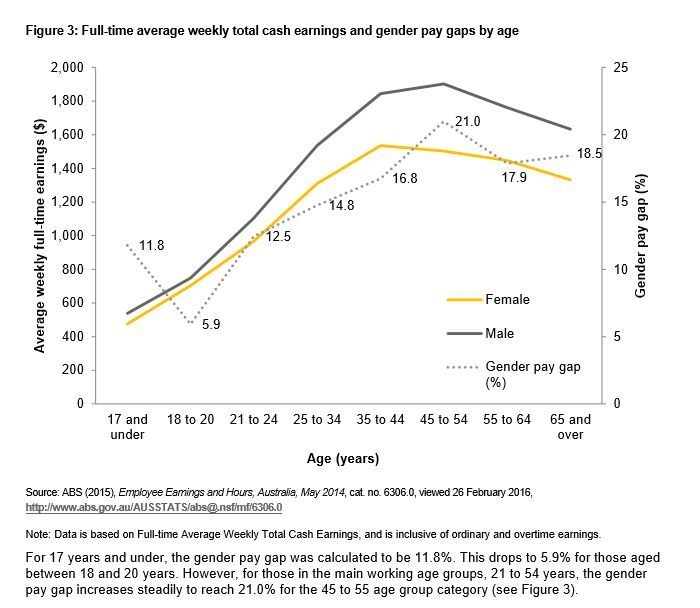
Graph looking at data for full time wages and gender pay gap. Image from https://www.wgea.gov.au/sites/default/files/Gender_Pay_Gap_Factsheet.pdf
Graph looking at data for full-time wages and the gender pay gap. Image from https://www.wgea.gov.au/sites/default/files/Gender_Pay_Gap_Factsheet.pdf

Why is it when there is media coverage regarding Hilary Clinton’s race for the white house, the question is, “How do you feel about a woman president?”

Why is being a woman a major issue?

I understand that America has not had a female president but you don’t hear the same questioning for a male wanting to be president. I would think that they would find this line of questioning rude and not seeing their credentials for the job rather than focus on gender.

If a woman is successful in her career and life, why is it that she is singled out due to her sex? We can see instantly that she is female and that is not a major thing to notice. Who cares!!!
The only thing that should be looked at and worried about is, can she do the job? A woman needs to be noticed for her skills and achievements not just due to gender.

You never hear in the press, that we have a man in this job and it is a first. I wonder how he will do? Why are men not put through the scrutiny women are? Why are men getting more money for the same jobs?

Why is it when men don’t hit their objectives/KPI’s in their job that they still get higher bonuses than women?

Ridiculous if you ask me. Isn’t the whole idea of the reward system to reward the workers that hit the objectives and performance indicators? Not the person that does not achieve?

This could be a woman or a man, the employee just has to hit their targets to be in the running for a bonus not get one without doing so.

“Despite getting the same performance ratings as their male colleagues, women get smaller bonuses on average, according to a report from human resources consultants Mercer.

Even men who only partially met their performance objectives got bonuses that were 35 per cent larger than their female counterparts.” (Perkins, Miki: 2015, November 4, “Gender pay gap higher in bonuses, report finds”

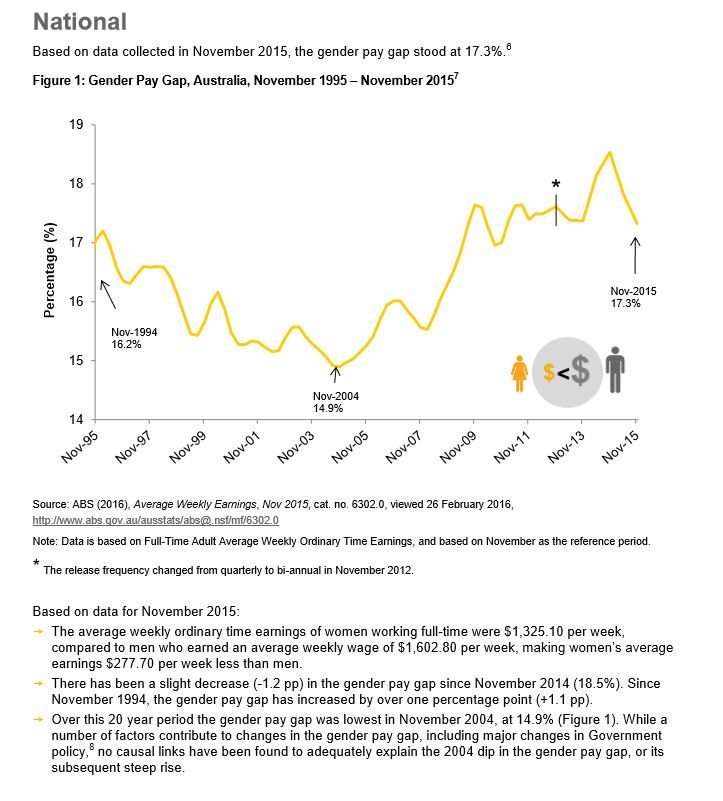
Looking at the gender pay gap from 1995 to 2015. Image from https://www.wgea.gov.au/sites/default/files/Gender_Pay_Gap_Factsheet.pdf


Did you know that girls get underpaid with pocket money? YES IT STARTS THIS EARLY!

“Boys earn $13 a week in pocket money on average, while girls get $9.60, according to a survey done for the Heritage Bank and released in time for International Women’s Day this week. The bank made similar findings in 2014. (Fitzsimmons, Caitlin: March 8, 2016, “Girls get less pocket money”, The Sydney Morning Herald)

How atrocious that boys even when little still get paid more! I wonder how this works?

Why would parents pay girls less than their boys? I know I wouldn’t. 

According to the article from the Herald, it says it could be down the types of jobs done by boys/girls or how the child negotiates. Or maybe the fact that girls are expected to just do housework or jobs around the house for no pay… If this is the case that is just horrible! Living in 2016 and just due to your gender you are expected to do things for no pay. Wrong I tell you! Also if this is so and the reason, showing boys that housework or other chores around the house are not to be valued and not paid is not right at all.


I don’t understand why having a penis makes you earn more over a lifetime. Maybe I need to get a fake one to improve my chances?????

Why is this discrepancy occurring? As an employer, what makes you underpay women?

Why is it okay to pay female employees less?

Women are equally deserving as men, women have the same education and skill base, women are focused and high achieving, and would like to be promoted and go places just like men. This is not something different.

Just because we are female does not make our wants and desires any different to a man. We are just working harder and for less money!

When I was working in the corporate world, I was keen to be promoted and to progress in my career. I saw the men get promoted but when I put my hand up and showed interest I always got told not now, you don’t have the skills yet (although I was already doing the job but did not have the new title and new pay to accompany it) and much more. During my time at many companies, management changed and this meant it was mostly men that took up positions of power, and therefore brought along their mates, who were of course male. I must say that there were a few powerful and lovely women who did a great job and I greatly admired them.

Why is ambition from a woman seen as a terrible trait to have? If I was a man I’m sure the outcome would have been completely different.

Ambition is a great attribute and I should be rewarded. I wish I would know what it would have been like if I was a man,  would my life and career have looked different? Would I have been the CEO of a company by now?  Maybe it is best not to know, if I knew how it could have been, I think it would make me even angrier.

I was always taught, that you study hard, work hard and do well, good pay will follow. Gender did not come into it. I really don’t see how your sex should determine pay.

Women live longer than men and therefore need more savings to live. Being short-changed in the earnings department means that women’s superannuation is much less than a man’s and even lower if they have had a career break to look after children or other family members.

“The gender pay gap is worst where pay is kept secret and women often find out they are being paid less than their male colleagues after years on the job,” she said.

The gender pay gap is currently at a 20-year high of 18.8 per cent, according to the Workplace Gender Equality Agency. It means that, on average, women earn $298.10 a week less than men. Put another way, they have to work an extra 66 days a year to take home the same amount as a man. (Gartrell, Adam: 2015, August 2, “Greens call for an end to ‘salary secrecy’ to help bridge gender pay gap”, They Sydney Morning Herald)

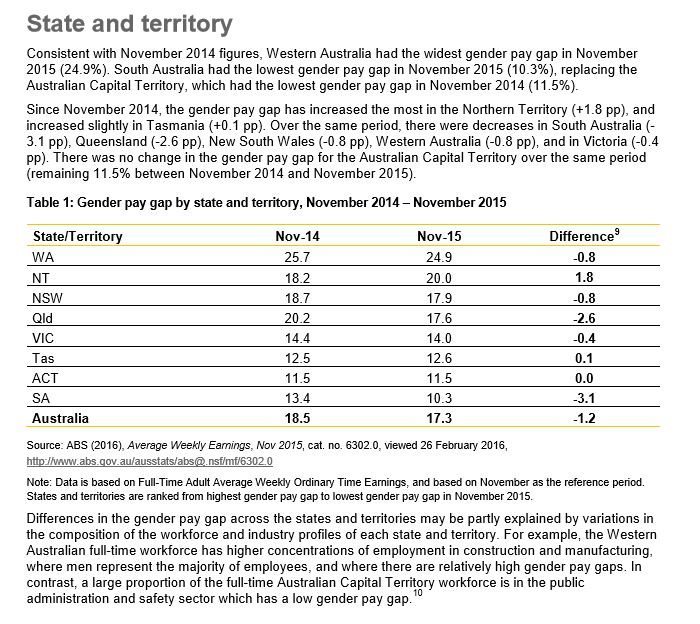
Pay gaps broken down by state. Image from https://www.wgea.gov.au/sites/default/files/Gender_Pay_Gap_Factsheet.pdf
Pay gaps are broken down by state. Image from https://www.wgea.gov.au/sites/default/files/Gender_Pay_Gap_Factsheet.pdf


Wow! Women earn $298.10 less each week compared to men! That is a lot to not be earning.

That is a loss of $15,501.20 per year in earnings.

Fancy missing out on 15K per year. That is a HUGE gap! I am not sure what industry that these figures were taken from or if this is just an average of many women interviewed and data collected from the Workplace Gender Equality Agency.

If businesses did not keep pay secret then women would know what men and women in similar roles were being paid.

This would help negotiation for salary and make sure that women are not being underpaid. Making pay transparent would also help everyone, not just women. Not knowing what certain roles are being paid and what you can ask for is definitely hard.

If you know what the value of roles are, you are so much more informed, plus employers will, of course, get highly trained individuals that will work hard and wish to grow with the organisation.

The Prime Minister, Malcolm Turnbull, has been focusing on innovation and technology. My girls are very interested in the STEM subjects, Science, Technology, Engineering and Maths. Hubby and I have encouraged this as we believe that the jobs of the future will have some or all of these skills. Also if the twins focus on these subjects and are good at them, they can get a job that pays well in the future. Why are girls not participating in these areas as much as boys? Why are we not encouraging girls to give it a go?

“A recent OECD report found less than one in 20 girls from OECD countries considered careers in science, technology, engineering and maths. In 2013 in New South Wales a tiny 1.5 per cent of girls took the trio of advanced maths, physics and chemistry. Yet a recent study by PricewaterhouseCoopers revealed that in the future 75 per cent of the fast-growing occupations will require STEM – science, technology, engineering and mathematics skills. We are locking ourselves out of the workforce. If we are going to earn the same as our pipsqueak brothers, we will have to think hard about the choices we make.” (Clarke, Ruby, 2015: June 28, “Teenage girls need to change themselves to affect the gender pay gap”, The Sydney Morning Herald)

How low is 1.5% of girls participating in STEM subjects in New South Wales! We need higher numbers. What do you think?

There is also the argument that women work in part-time roles or choose not to work due to kids and other commitments. That might be true.

However, for the women that wish to work, it is rather difficult if you do have kids as well. Juggling motherhood, career and life is tough. Not horrible but just more things to organise and get lined up to make sure everything happens.

I for one would love to work part-time or say full time. A couple of days in the office and the rest from home. My jobs have all been online and therefore can transition to work from home roles. I can put kids in care for the days that I’m at the office but don’t want to have kids in full-time care. Firstly it is too expensive and, secondly, I will never see them.

I don’t have the luxury of living near relatives and therefore I am the one that does all kid-related activities. School run, and after school activities is all down to me. Being the only one doing all this is limiting and therefore I have created my own opportunities with my blog. My own online presence, to hopefully build my empire! (You can only put it out there. You never know right?)

“Sure, if women are simply choosing to work shorter hours in lower-status jobs in lower-paid industries – perhaps because they choose to take on the bulk of the task of looking after children and the home – then there is no problem here.

But – and here’s the rub – perhaps these are not choices freely made.

Perhaps women don’t want to retire with no superannuation or other savings after all. Perhaps they would like to earn a pay-packet the equivalent of a man’s, but they’re too busy looking after those male’s kids for free.”  (Irvine, Jessica, 2015: July 31, “Apples and oranges: Gender pay gap is worse than you think”, The Sydney Morning Herald)

Many women would love to get the job after kids to fit into their new lifestyle, however, many companies are still stuck with the mindset that you have to physically turn up to a job in an office.

How about job share? Part-time in the office for 2 days and work at home for 3 days. Work some hours in the day and some in the night and weekend? Flexible hours as long as the work gets done.

Understand if you need to be online or on the phone for meetings or in the office. You can always have a catch-up meeting every fortnight or month?

Depends on the business and workload.

With technology, I don’t why more places embrace telecommuting. It would save the company money and also allow them to get quality employees that will stick with the company due to allowing them to be flexible and work from home.

Think about all the women with fabulous skills that are itching to get the job that businesses are overlooking!

businessmanager_web
“Clearly society has to change in order for women to rise, but we, the teenagers of Australia, also have to change our attitudes and perceptions. Major corporations must set targets to increase women’s participation in managerial positions.

Men additionally need to take more responsibility for child care and share the load. Unionised workforces also tend to be higher paid workforces so if women join unions, their rates of pay should increase.

But. It’s also down to you and me, ladies. We need to change, too. We need to think about what kinds of lives we want. What kinds of jobs will get us more money? Are we going to be in charge of our own futures or are we going to rely on men to pay for them? If you want to work with children, how are you going to pay for a house in Sydney now the average price has hit almost a million dollars?” (Clarke, Ruby, 2015: June 28, “Teenage girls need to change themselves to affect the gender pay gap”, The Sydney Morning Herald)

When I see a role that is just perfect for me and of course will pay a full wage. Why is the money for child care seen to only be taken from my wage?

Why is child care seen as something that the woman needs to sort out in order to work?

Isn’t child care an issue for both parents?

Having an extra wage would help out the whole family and therefore it is an issue that the family need to address not just one person.

I agree that men need to take more responsibility for child care and help with this more. Some men do this and there is no issue here. However the more equal it is, the more easily women can re-enter the workforce and contribute to the family, society and build for their future as well as their families.

It is 2016 and sex is still seen as an issue regarding pay. I would have thought that this would not be the case.

I hope for my girls that this is not the case when they are older but I would have thought that it would have been already resolved by now. So I’m not holding my breath, however, I can live in hope.

As I have said before, gender is not an issue for pay. The only important issue is, can you do the job, and do you have the skills?

Pay for the role not because someone has a different anatomy than another.

Let me know your thoughts.

Thanks for reading my HUGE post about this issue!

Sign up for my newsletter

Stay current with all the things that are happening on Mummy to Twins Plus One. Don’t miss a thing by signing up for my newsletter. This newsletter will list all giveaways and fabulous things that are happening.
 

This post has affiliate links