Categories
Family

Earth Day Should Be Every Day: The Lorax Was Ahead of His Time 🌍🌱

I may have missed Earth Day this year, but honestly, shouldn’t every day be Earth Day? We need to make caring for our planet a daily priority, not just reserve it for one day a year. Every day is a chance to reflect on how we can protect the environment, reduce our carbon footprint, and safeguard the ecosystems we depend on.

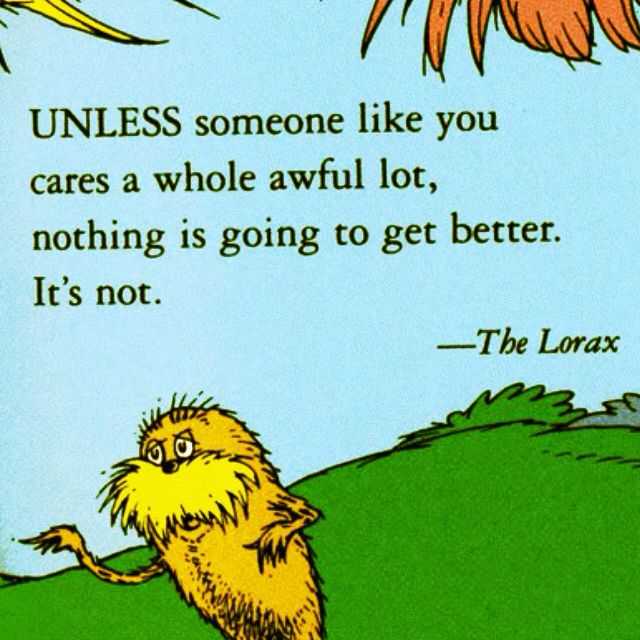
Dr. Seuss, in his timeless classic The Lorax, was way ahead of his time. Long before the world truly started to focus on environmental concerns, Seuss was telling us to pay attention to our planet and take responsibility. “Unless someone like you cares a whole awful lot, nothing is going to get better. It’s not.” These words ring truer now than ever before. Seuss’s charming and heartfelt story reminds us that if we continue to ignore the environment, we’ll only have ourselves to blame.

In a world that’s increasingly feeling the effects of climate change, pollution, and resource depletion, we can’t afford to wait for Earth Day every year to reflect on our actions. The Lorax teaches us that it’s up to each of us to make a difference—every day.

So, while I may have missed Earth Day this year, I’m choosing to act every day as though it’s Earth Day.

Will you join me? 🌎💚

And speaking of The Lorax, have you explored the amazing eco-friendly activities from Twinkl? Dive into a world of Lorax fun and learning with their collection of eco-conscious worksheets and activities, perfect for teaching kids about environmental responsibility.

Why not get started with their beautifully illustrated Lorax Colouring Sheets? Kids can bring the Lorax and the Truffula Forest to life with colour! These iconic illustrations are sure to spark creativity and improve fine motor skills. Or, get crafty by making your very own Truffula Tree—what a fun way to bring Seuss’s world into the home!

Additionally, Twinkl’s Lorax Earth Day Writing Activity prompts kids to reflect on their impact on the environment. Through guided questions, they’ll explore ways to reduce, reuse, and recycle. It’s a wonderful way to teach kids the importance of Earth Day while helping them develop important writing and critical thinking skills.

No matter which activity you choose, we’re sure you and your little learners will have fun while caring for the earth! 🌍

Check out Twinkl’s Lorax-themed activities here: Twinkl’s Lorax Resources

Let’s keep the Earth Day spirit alive all year long with these educational and fun activities. 🌱

Here are some ways to help all year round

1. Plant a Tree

Contribute to reforestation by planting a tree in your backyard or a local community space.

2. Nature Walk

Take a walk in a nearby park or nature reserve to appreciate the beauty of the Earth.

3. Clean Up Your Community

Organise or join a local cleanup to remove rubbish from parks, beaches, and your local area.

4. Start a Garden

Plant vegetables, herbs, or flowers to support biodiversity and grow your own eco-friendly food.

5. Reduce, Reuse, Recycle

Commit to cutting waste by reusing items, recycling materials, and being mindful of what you toss.

6. Switch to Reusable Bags

Ditch single-use plastic and opt for sturdy, reusable shopping bags.

7. Compost

Start composting kitchen scraps and yard waste to cut landfill waste and nourish your soil.

8. Go Green with Your Commute

Bike, walk, carpool, or use public transit instead of driving solo.

9. Conserve Water

Take shorter showers, fix leaks, and turn off the tap when brushing your teeth.

10. Create an Eco-Friendly Home

Switch to energy-efficient bulbs and unplug electronics when not in use.

11. Educate Yourself and Others

Read, watch, or listen to resources on sustainability, and share what you learn.

13. Support Local Farmers

Shop farmers’ markets to reduce food miles and support sustainable agriculture.

14. Make Homemade Cleaning Products

Use simple ingredients like vinegar and baking soda to reduce the use of chemicals at home.

15. Unplug for a Day

Take a break from screens and electronics to connect with nature and reduce energy use.

16. Switch to Plant-Based Meals

Go meatless for a day or more to lower your environmental footprint.

17. Encourage Wildlife

Add bird feeders, bee hotels, or native plants to make your yard a habitat.

18. Use Natural Products

Choose products with fewer chemicals and less packaging.

19. Write Letters to Leaders

Advocate for environmental policies by contacting your local representatives.

20. Create Eco-Art

Use recycled materials to create art that spreads environmental awareness.

21. Join a Sustainability Group

Find local organisations working on conservation and get involved.

22. Use Digital Rather Than Paper

Choose digital documents, notes, and billing to cut paper waste.

23. Spend Time in Nature

Hike, picnic, or just relax outdoors to connect with the natural world.

24. Teach Kids About Nature

Explore the outdoors with children and talk about how ecosystems work.

25. Support Eco-Friendly Brands

Buy from companies committed to sustainable and ethical practices.

26. Host a Clothing Swap

Reduce fast fashion waste by exchanging clothes with friends instead of shopping.

27. Create a Nature Journal

Track what you see and experience in nature to deepen your appreciation for the natural world.

28. Advocate for Clean Energy

Research and consider renewable energy options, such as solar, for your home.

29. Limit Single-Use Plastics

Say no to straws, plastic cutlery, and other disposable items when you can.

30. Live Minimalistically

Declutter and donate to reduce waste and live with intention.

31. Use Eco-Friendly Transportation

Try a bike, an electric scooter, or an electric car to lower emissions.

Sign up for my Newsletter


Categories
Education

April is Autism Awareness Month – Explore Twinkl’s Great Resources!

Autism Awareness Month isn’t just a date on the calendar for me—it’s personal. With a child on the spectrum, I’ve seen firsthand how understanding and acceptance can shape their world. The more we educate ourselves and those around us, the more we can create spaces where neurodivergent kids feel valued, included, and supported.

One of the best ways to make a difference is by starting conversations early. That’s why I love Twinkl’s Autism Awareness Week PowerPoint—it’s a fantastic way to introduce autism in a way that kids can relate to. It clears up misconceptions with a true or false discussion, helps children understand how autism affects communication, routines, and interactions, and encourages empathy.

Autism Strengths Poster from Twinkl

Here are some great resources to spark those conversations:

Twinkl has thousands of resources for teachers and parents to help kids learn about autism in a meaningful way. Awareness is just the first step—acceptance and inclusion are what truly make a difference.

So, whether you’re a teacher, a parent, or just someone who wants to help make the world a little kinder, take the time to start the conversation. It means more than you know.

SIGN UP FOR MY NEWSLETTER

Don’t miss a thing by signing up for my newsletter. The newsletter will list all giveaways and fabulous things that are happening. Stay current with all the things that are happening on Mummy to Twins Plus One.


Categories
Education

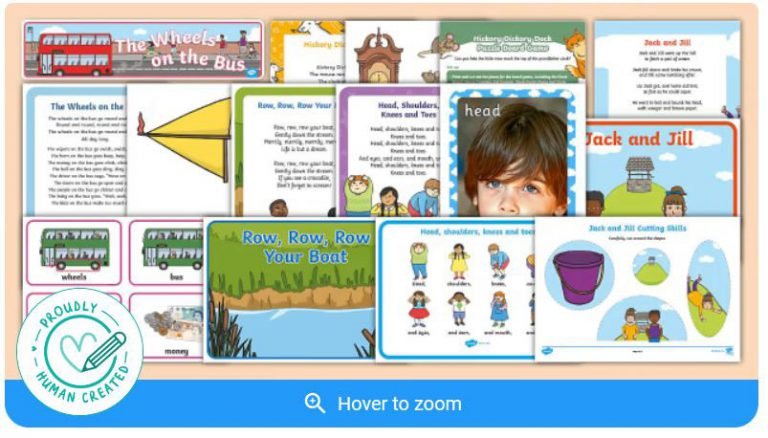
Celebrate Nursery Rhyme Week with Twinkl!

Hey diddle diddle, it’s that time of year!
World Nursery Rhyme Week is finally near!
From November 11th to the 15th, get set—
There’s fun and learning you won’t forget!

🎉 What’s the Buzz About? 🎉
Nursery rhymes aren’t just a sing-song delight,
They’re the building blocks for kids, that’s right!
Phonics, counting, spelling—oh my!
These rhymes help little minds soar high.
From “Head, Shoulders, Knees, and Toes,”
To the “Wheels on the Bus,” anything goes!

🌟 Join the Rhyme A Day Challenge! 🌟
Five rhymes, five days—such a treat!
With songs and games that can’t be beat.
Twinkl’s got you covered, from crafts to play,
Download your resources and brighten your day!
Make puppets for “Hickory Dickory Dock,”
Or sing along and watch the clock tick-tock.
You can create, explore, and even pretend,
With Twinkl’s ideas, the fun never ends!

Why Nursery Rhymes?
Not just for toddlers—they’re for everyone,
From parents to teachers, let’s join the fun!
Kids learn while singing, dancing, and playing,
It’s magic in action, there’s no delaying!
Language and numbers come to life,
Nursery rhymes cut through learning strife.

So, how will you celebrate? Don’t miss a beat—
With Twinkl’s resources, your week’s complete! 🎨

Categories
Education

How to Create an Impressive Gobi Desert Diorama

Hey there, adventurous parents and young explorers! Today, we’re diving into the fascinating world of the Gobi Desert. If you’ve ever wondered what it’s like to wander through this unique landscape, buckle up because we’re about to embark on a journey of discovery!

It’s diorama time at school for grade 3, and everyone is off-creating their own dioramas. My little boy chose the Gobi Desert for his project, but the possibilities are endless for your diorama.

You might decide to explore the lush, vibrant ecosystems of a rainforest, the vast, open grasslands of the savanna, or another unique desert environment from around the world, like the Sahara or the Mojave. Each habitat offers its own fascinating plants, animals, and landscapes, allowing you to tailor your project to whatever environment captures your imagination the most. It doesn’t feel that long ago that my girls were doing this same project. Thanks to a homework project, it has sparked an interest in the habitat of the Gobi Desert.

What is the Gobi Desert?
The Gobi Desert is a vast, arid region in Asia, covering parts of northern and northwestern China, and southern Mongolia. It’s renowned for its extreme temperatures, from scorching hot summers to freezing winters, making it a challenging yet captivating environment to explore.

Plants and Animals of the Gobi Desert

Plants: Despite its harsh conditions, the Gobi Desert is home to resilient plant life such as saxaul trees, which have deep roots to find underground water, and various types of grasses and shrubs adapted to sparse rainfall.

Animals: Some of the most iconic inhabitants include the Bactrian camel, known for its ability to survive on sparse vegetation and store fat in its hump for energy; the Gobi bear, a rare and endangered species adapted to cold desert conditions; and the jerboa, a small hopping rodent that has adapted to the desert’s sandy terrain.

Soil and Geography
The Gobi Desert features a vast expanse of gravel plains, rocky mountains, and sand dunes. Its soil is often sandy and nutrient-poor, contributing to the challenging conditions for plant growth.

Additional Resources and Activities
For more fun and learning about the Gobi Desert, check out these resources:


Creating Your Gobi Desert Diorama


Now, let’s bring the Gobi Desert to life with a fun and creative 3D diorama!

Materials Needed:

  • Shoebox or any small box as your diorama base
  • Sand or craft sand for the desert floor
  • Small pebbles or rocks
  • Artificial plants like desert grasses
  • Plastic animal figurines (camels, bears, jerboas)
  • Paint and brushes (optional, for coloring the backdrop)
  • Glue, scissors, and tape

I found images of animals and plants from the Gobi Dessert and cut them out to stick into the diorama. On the back we listed what is in the diorama and suggested for people to see if they can find them.


Steps to Create:

  • Create your backdrop: We used the Gobi Desert Colouring page from Twinkl to give our diorama a nice sense of place. It allowed all the animals and plants to look at home in the Gobi Desert habitat.
  • Prepare the Base: Line the inside of your shoebox with sand to create the desert floor. Add small pebbles and rocks to mimic the rocky terrain.
  • Add Vegetation: Place your artificial plants strategically around the diorama. Saxaul trees can be represented with small twigs or painted craft sticks.
  • Include Animals: Position your animal figurines in their natural habitats. The Bactrian camel might be wandering across the sand, while a Gobi bear rests near a rocky outcrop.
  • Decorate: Use paint to create a backdrop for your diorama if desired. You can paint distant mountains or a clear blue sky to enhance the desert atmosphere.
  • Final Touches: Once everything is in place, secure all items with glue or tape to ensure they stay put.

Hamilton Island Holiday Homes - Winter Sale Offer

Let the Adventure Begin!
Voila! Your Gobi Desert diorama is ready to amaze and inspire. Take a moment to admire your creation and imagine the stories that unfold in this harsh yet beautiful desert landscape.

Whether you’re a parent guiding your child through this project or a young explorer eager to learn more about the world, creating dioramas like this is a fantastic way to blend education with creativity.

Explore more desert environments like the Sahara or the Australian Outback with Twinkl’s desert resources, or venture into lush rainforests and expansive savannahs for more exciting diorama ideas!

Ready for your next adventure? Share your diorama creations with us in the comments below!

P.S. Need more ideas on building dioramas? Check out Twinkl’s tips!

Sign up for my newsletter

Stay current with all the things that are happening on Mummy to Twins Plus One. Don’t miss a thing by signing up for my newsletter. This newsletter will list all giveaways and fabulous things that are happening.


This post has affiliate links

Categories
News

5 Reasons why you need Twinkl membership

I’m a Twinkl Ambassador

I’m so excited and proud to announce that I am a Twinkl Ambassador….yep what great news. As a parent, I am passionate about kids’ education and anything that I can do to support my children I am doing. This is why I love the tools and resources that Twinkl offers to allow all children to thrive in their educational journey.

What is Twinkl?

Twinkl is a resource for teachers and parents. They have resources that support all levels from Kindy to High School that is aligned to the Australian Curriculum.

Twinkl is an online educational resource platform that provides a wide range of educational resources, activities, and lesson plans for children of all ages. It was founded in the UK in 2010, and since then, it has expanded to serve educators and parents around the world, including Australia.

Here is an overview of the foundation to year 2 level on Twinkl – So many resources available.
I am very proud and excited to be a Twinkl Abassador
Treasure words and Fake Words Phonics Game

Why Twinkl membership is a must

Here are some ways Twinkl can help parents support their children at school, as well as how it helps teachers and homeschooling parents:

  1. Educational Resources: Twinkl offers a vast library of educational resources that align with the Australian Curriculum, from kindergarten to high school. Parents can access materials that cover a wide range of subjects, including mathematics, science, English, and social studies, to support their child’s learning at home.

  2. Printable Worksheets: Twinkl provides printable worksheets that parents can use to help their child practice their skills at home. These worksheets cover a range of topics and are designed to be engaging and fun for children.

  3. Interactive Activities: Twinkl offers a range of interactive activities that parents can use to engage their children in learning. These activities include games, quizzes, and puzzles that help children learn while having fun.

  4. Lesson Plans: Twinkl has a variety of lesson plans for teachers that cover a range of topics and subjects. Parents who are homeschooling their children can also use these lesson plans to structure their child’s learning.

  5. Homeschooling Resources: Twinkl offers a range of resources for parents who are homeschooling their children. These resources include lesson plans, worksheets, and activities that are designed specifically for homeschooling families.

Twinkl is a valuable resource for parents who want to support their child’s learning at school, as well as for teachers and homeschooling parents. With its extensive library of resources, printable worksheets, interactive activities, lesson plans, and homeschooling resources, Twinkl provides a comprehensive solution for parents who want to help their children succeed academically.

Sign up for my newsletter

Stay current with all the things that are happening on Mummy to Twins Plus One. Don’t miss a thing by signing up for my newsletter.

This post has affiliate links

Categories
Education

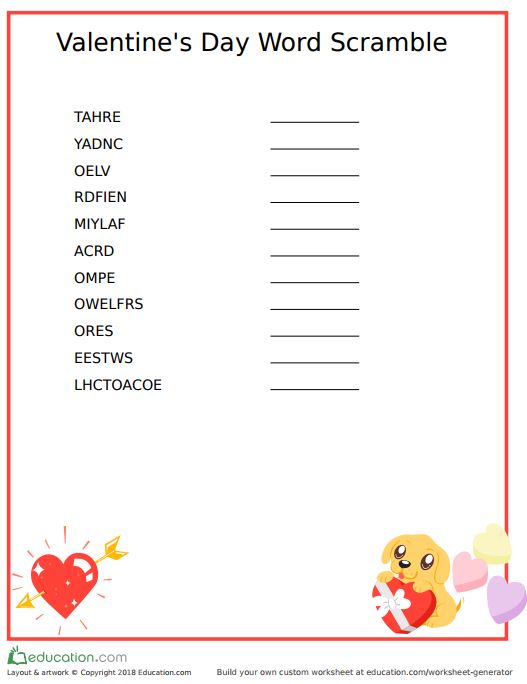
Valentine’s Day Word Scramble Worksheet

Do your kids love to do word scrambles?

Since Valentine’s Day is around the corner a Valentine’s Day inspired worksheet is ideal.

Do you love giving your children more worksheets so they can practice and get better at their school work? I know I do!

Did you know that word scramble worksheets help kids with spelling?

Kids have fun solving the scrambled word and have no idea that they are learning at the same time. What a win as a parent!

Education.com is a wonderful resource for educational worksheets to help your children learn.

You can also become an Education.com member and get access to more amazing content to help your kids.

I love that Education.com ties-in times of the year to help kids have fun while they are actually doing work.  The free worksheets are based on Valentine’s Day.


The Valentine’s Day Eduction.com downloads are below:

Learn some new words for Valentine’s Day with this word scramble from Education.com!

To get more spelling practice, check out these resources.


You can even build your own worksheet from the Education.com worksheet generator.  Make your own for the kids today!

Would you like to have more Valentine’s Day worksheets? If you do there are more. Download and have fun celebrating.

Disclaimer: I was approached by Education.com to share this free worksheet with my readers. I love helping kids learn, and like to share great resources for parents.

Sign up for my newsletter

Stay current with all the things that are happening on Mummy to Twins Plus One? Don’t miss a thing by signing up for my newsletter. This newsletter will list all giveaways and fabulous things that are happening.


Categories
3 years and beyond Pre-School

Introduction to new school

It was an exciting day today. The girls and I went to their new school, Blue Gum Montessori Children’s House for orientation. Lillian and Julia seemed to love it, they were excited by all the new things that is on offer.  When we first got there they ran around and touched all the new things in the different areas. The school has different areas set up for learning, some areas are for sea shells, blocks, puzzles and the like. The teacher, Carmel, had hats ready to put their names on, if the girls go out they must wear their hats. Once they were named, Julia and Lillian walked over to the pegs where the other hats were and added theirs. It was very nice to be given a school hat for each girl.

Carmel showed the girls around, the toilets, the areas of the school, introduced them to the 2 goldfish. I asked if they had names and Lillian wanted to call them Goldie, however at home Julia said that their names were Gold Gold.  Both girls have a folder for their artwork and a book to draw and create artwork. They were told that they could put 2 stickers on their book and folder. Both girls were very happy about this.

We were also shown the place where the girls will put their bags in the morning, and if their lunch needs to be in the fridge, must give it to staff as the fridge is in the back of the school. I got some paperwork and a book on the school, will fill out and drop off for the first day of school. Orientation lasted about half an hour and it was a very pleasant introduction to the school, it was very nice that they spent time with the girls one on one for the first day and that they let them paint some pictures and run around and get a feel for the place.

The girls were very taken with the sea shells and with the magnifying glass. They kept on going back to the shells and at one point, Julia had the magnifying glass she was holding it up to her eye. I could not help but laugh her eye looked huge and she looked so cute. She was looking at everything with the magnifying glass. She came up to Carmel and I and wanted to look at our eyes, she was amazed at how big things looked.

I think that this will be a great place for the girls to take their next steps towards school and learning.  They seemed happy, excited and relaxed with the school and the teachers there. Carmel and Mary were there to greet us and to show us around. I have been told to bring the girls for a 9.30am start on their first day. Will be keen to see how they go with kids there and a whole day of learning next Monday. I am so excited for my little girls. I am also proud of how well behaved they were.

One thing that I am keen to see if pre-school helps, is independent play rather than relying on each other to play with. Currently they girls are very reliant on each other. They are very close and when one child decides not to play a game with the other, there is a melt down and the child that still wants to play the game tries to drag the other child back to play. This as you can imagine does not end well and there is a lot of tears and carry on. I have been trying to tell them when this does happen, that if you want to do the activity or task, you can do it yourself. You don’t need Julia/Lillian depending on who it was to play with you. The school fosters independence and the hope for me is that it will show the girls that they can happily work away at something if they are interested in it. Then if they want to play together, they can play together. We will see, but it will be interesting to see if the school has any influence over this issue. If you have twins or children close together, is this something that happens to you? What have you done to show your children it is o.k to do a task by themselves?

How has your child enjoyed pre-school or the start of big school (primary), did it go well? What are you giving them for lunch? I need to think about different choices that they get exposed to more foods.  I suppose with 3 days at school this will be interesting regarding lunches and watching them develop.  Let me know what has happened to you and your family.